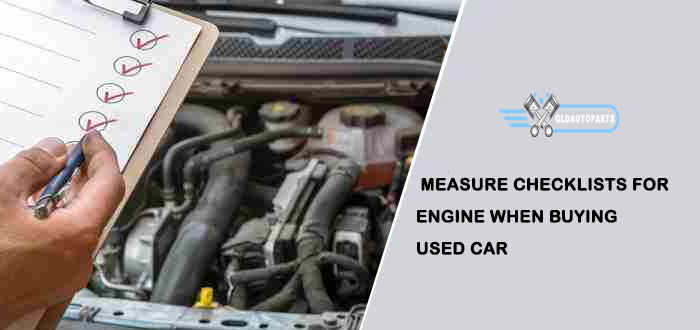
Top 10 Measure Checklists for Engine When Buying Used Car
While buying for a used vehicle anywhere either Australia or any other country most of the checks apply everywhere, the condition of the engine the car you’re looking to buy is critical because the engine is the heart of the vehicle. It’s difficult to estimate the mechanical cause of the engine for the duration of a quick test drive.
Therefore, we recommend having a used vehicle thoroughly inspected by a qualified mechanic before reaching an agreement with the seller, whether it’s a third party or a private seller. Here are some key points to help you identify signs of engine problems or lack of maintenance when inspecting a used vehicle.
Testing an Engine in a Used Vehicle

It is hard to evaluate the mechanical condition of the engine for the duration of a short takes a look at the pressure that is why we propose having a used vehicle inspected with the help of a certified mechanic.
Check Services History

For any used car, each service record reveals the vehicle’s actual condition and reflects the owner’s level of care for their car. The automotive industry has proven that timely servicing can increase mileage by up to 30% and prevent unexpected issues when performed correctly and on schedule.
Sometimes, a service manager will call and say your service is due. Some people treat this as essential, while others ignore it, thinking their engine is fine because they haven’t driven it much. However, if you’re not regularly checking your engine, you should hire a private mechanic or evaluator to inspect it.
Have a Glance Underneath the Hood

Before checking under the hood, ensure the engine is off, the transmission is in “Park,” and the brakes are applied. Look for leaks, the smell of burnt oil, or signs of poor-quality repairs, lack of maintenance, or “racing” modifications. Dealers often clean the engine bay before showing a used car to potential buyers. Just because everything appears clean and glossy doesn’t mean the engine is in good condition. Here are some examples:
Burnt Oil Smell Underneath the Hood

The car might appear fine under the hood, but a strong smell of burnt oil can indicate oil leaks. Repairing these leaks can be expensive. At higher mileage, worn piston rings and cylinders allow blow-by gases to enter the engine, increasing pressure. This forces oil out through seals, gaskets, and the PCV (crankcase ventilation) system. This issue is more common in turbo engines.
Visible Oil Leaks

Oil leaks might not be visible from under the hood, but here’s a tip: look from underneath. Take a photo or video with your phone. Check the lower part of the engine and transmission. Everything should be dry. The vehicle in the picture has a significant oil leak around the engine under shield.
This car, for example, has no leaks; everything appears dry. Click on the image to view a larger version.
Coolant and Alternative Leaks

The car may run fine, but a coolant leak from the radiator is a concern. At a minimum, the vehicle needs a new radiator, but a cracked radiator often indicates more serious problems. It’s best to avoid used cars with this issue.
Low Oil level, Dirty Oil

Checking the oil level on the gauge can reveal a lot about the engine’s condition. Ensure the engine is off, apply the brakes (be cautious, as some engine parts may be hot), and refer to your vehicle’s owner’s manual for instructions on how to check the engine oil. A low oil level could indicate oil consumption by the engine or that it’s been a while since the last service.
Running the engine low on oil causes it to wear out faster. The oil level should generally be close to the “Full” mark, as shown in the image. If there is no oil, the level is extremely low, or the oil is mixed with another fluid, it could be a serious problem, so avoid the deal.
Engine Off, Check Under the Oil Cap

If you’re not comfortable doing this, leave it to your mechanic. With the brakes applied and the engine off, remove the oil filler cap. Be careful, as it may be hot; use a towel or rag. Look underneath, using a lamp. In some engines, you can clearly see the internal components.
Performance Mods

If a car has performance modifications, if done correctly, they can improve vehicle performance. However, poorly done engine modifications can lead to several issues, especially if original parts are no longer available. If a vehicle has been modified, it’s also possible it has been raced or otherwise abused.
Does the Engine have a Timing Belt?

Not all cars have a timing belt; some vehicles have a timing chain instead. In most cars, a temporal arrangement belt must get replaced between 60K and 105K miles. The worth to interchange a temporal arrangement belt ranges between $200-$450 in a very 4-cylinder engine and $550-$760 in a V6.
If the car you are looking at has a timing belt, it’s a good idea to check if it has been replaced. Some mechanics place a sticker on the engine after a timing belt is replaced. You can’t see the timing belt under the hood; it’s hidden under covers.
To determine its condition, your mechanic may need to remove one or two covers, and it’s not always straightforward. A more practical option is to check the service records to see if the timing belt has been replaced. Research different timing belts.
Cold Begin will Reveal Several Hidden Issues

The best way to catch hidden engine issues is to start it cold. To do this, it’s a good idea to arrive at the dealership a little before your appointment time. You’ll also be able to determine if the battery is in good condition, as an old battery may need to be boosted to start the vehicle.
Be cautious about engine noises and smoke when the engine is first started. If the engine rattles or makes other loud noises, or if there is blue smoke from the exhaust, look for another vehicle. For example, the vehicle in the picture showed blue-grey smoke from the exhaust, and it smelled like burning oil. Blue smoke indicates that the engine is burning oil.
Test drive

After the car is started, all warning lights on the dashboard should turn off. If the “Check Engine” light or “Service Engine” light remains lit, the engine computer has detected a fault.
It can be a minor issue; however, it can also be an extremely expensive problem. There’s no way of knowing the severity until the vehicle is correctly diagnosed. Research what the “Check Engine” light indicates.
See: Rules for Buying a used vehicle by Queensland Government
During the take, a look at drive, be careful of engine noises, vibration, lack of power, or the other drivability problems. Once started, the engine ought to run sleek, while not shaking or hesitation. If you are feeling that the Engine is irresolute or lurching once accelerated, there’s a retardant. The idle speed ought to be stable too.
Take a look at drive the vehicle for as long as possible; typically, issues might not be evident throughout a brief drive around the block. It helps if you’ll be able to take a look at drive all told modes: acceleration, speed, stop-and-go traffic, main road cruising. Be careful of the engine temperature on the dash. Once the engine is warm-up, the temperature gauge ought to keep somewhere around the middle of the size.
Even if everything appears OK, we tend to powerfully suggest having the used automotive properly inspected by associate certified with the position as a mechanic before going ahead for the deal.